

Field notes from the season the buy button moved into the chat window, and what that does to the data underneath.
On September 29, 2025, ChatGPT got a checkout button. Not a link out to a store, an actual buy flow inside the conversation: Etsy sellers first, Shopify merchants queued behind them.
We filed it under demo-ware. Payment demos ride every hype cycle, and most of them die in the press release. That was our theory, and it did not survive the winter.
The part where it kept not stopping
Stripe and OpenAI had open-sourced the layer underneath, the Agentic Commerce Protocol: an open standard for commerce flows between buyers, AI agents, and businesses. The payment piece is a shared token scoped to one merchant and one basket total, so an agent can pay without ever holding the card. Nobody builds token scoping for a stunt.
Then January 11, 2026. Shopify announced the Universal Commerce Protocol, an open standard co-developed with Google, alongside Agentic Storefronts managed straight from the admin and Shopify Catalog: billions of products pushed through specialized LLMs that categorize and standardize the data. AI Mode in Google Search, the Gemini app, Microsoft Copilot, ChatGPT, all getting wired for native buying.
By March 2026 it stopped being a partner program and became a default. Millions of Shopify merchants can now sell inside AI chats, and ChatGPT shows up in order attribution like any other channel.
Then the Spring '26 Edition removed the last gate. Any developer can register an agent profile and query the Global Catalog with an API key, no approval step.
The new buyer is being mass-produced.

So we read the buyer's documentation
A customer that ships with API docs is a first for us, so we did the obvious thing and read them.
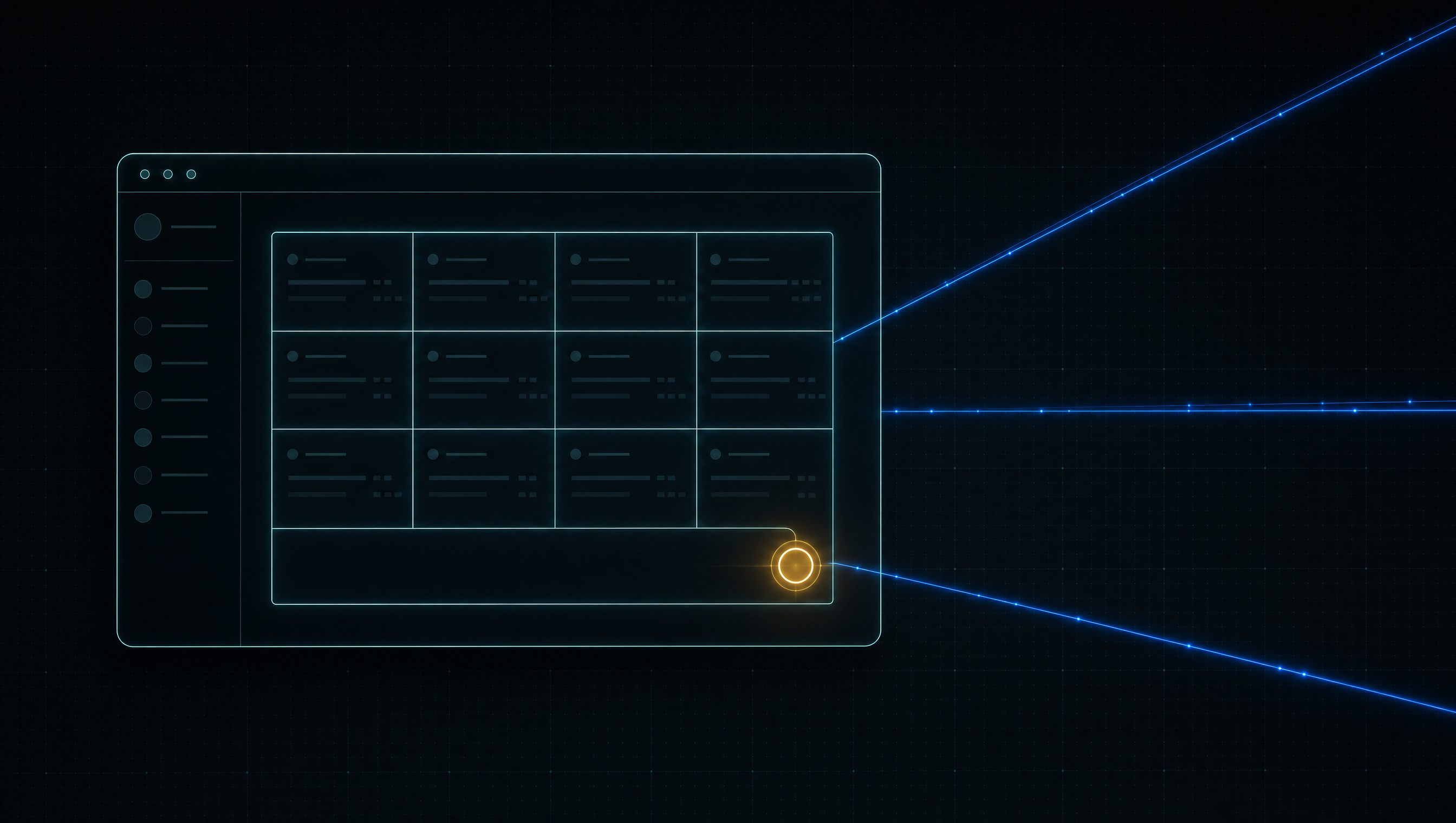
An agent shopping through the Catalog API hits one endpoint that spans every Shopify merchant. It pulls structured fields: titles, prices, variants with availability signals, checkout links. It filters at runtime by price range, shipping origin, and product taxonomy.
Notice what is not on that list. The theme. The hero video. The lookbook your brand spent a season getting right.
The agent reads fields. Vibes don't parse.
And one line in the docs carries the whole plot. Some fields, Shopify warns, "might not always be present or have varying accuracy," because its AI infers them from whatever product data exists. Where your record is thin, a model guesses on your behalf, and the buyer receives the guess as if it were your product.

The number that ends the argument
Shopify published one stat with the Spring '26 Edition: AI searches powered by Shopify Catalog convert at twice the rate of searches built on scraped data. It is Shopify's own number, measured on Shopify's own rails, so read it as directional. The direction is the point. Either the agent got structure or it got to guess, and structure converted at double.
That maps to what we find on the ground. Across the 642,000+ SKUs we've processed, the chronically empty fields are exactly the ones agents filter on: taxonomy category, variant attributes, the boring structured middle of the product record.
For years that middle was a chore you could defer. A human who can't find the material in a description squints at the photos and decides anyway. An agent runs the filter, gets no match, and moves to the next merchant behind the same endpoint. It doesn't bounce. It never arrived.
Notes for the next catalog we open
- Product data is now a storefront. For an agent, the title, taxonomy, variant attributes, and availability are the render.
- Fill fields before the platform infers them. An inferred field is a guess wearing your brand name.
- Watch the attribution line. Agent-originated orders now appear in the admin, and the week that number stops being zero is the week this stops being theory.
The checkout button is already inside the chat window. On the other end sits your catalog, read raw, no theme in between.
Feed the reader.
If you want to see what an agent sees when it opens your product data, OKART's Infrastructure Stress-Test reads your catalog the way the machines do, read-only, in a few days.
Sources
- Stripe powers Instant Checkout in ChatGPT: September 29, 2025 launch, Etsy sellers first with Shopify merchants next, Shared Payment Tokens scoped per merchant and basket.
- Agentic Commerce Protocol: the open standard co-developed by Stripe and OpenAI for commerce flows between buyers, AI agents, and businesses.
- The agentic commerce platform: January 11, 2026 announcement, UCP co-developed with Google, Agentic Storefronts, Shopify Catalog with billions of products standardized by specialized LLMs.
- Millions of merchants can sell in AI chats: March 2026 rollout across ChatGPT, Microsoft Copilot, AI Mode in Google Search and the Gemini app, plus ChatGPT attribution in admin.
- Agentic commerce for every developer: The Spring '26 Edition: self-serve Catalog access with an API key, agent profiles, and the 2x conversion figure for Catalog-powered AI searches.
- Build commerce agents with UCP: the agent journey from discovery to checkout, Global Catalog queries across every Shopify merchant from a single endpoint.
- Catalog API documentation: structured product data, runtime filters by price, shipping origin and taxonomy, and the AI-inferred field accuracy caveat.



Share:
The fastest way to audit an app is to take it away
One catalog, five countries, and a number that stops being true